The Sources
And Recommended Reading
Foundational Sources
The serious study of cunning folk is a relatively young field, but there are a handful of books that between them cover the ground thoroughly. Specific sources for each group of cards can be found below, but these books are foundational to the content on this site.

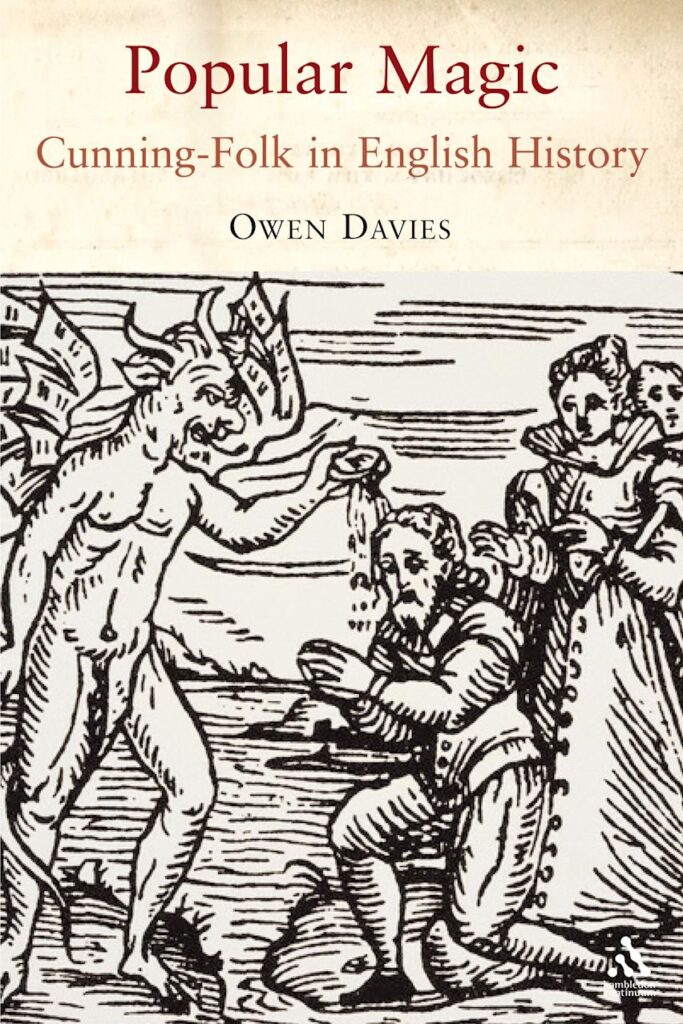
Popular Magic: Cunning-folk in English History
Owen Davies, 2003
The most comprehensive survey of cunning folk practice across England. Davies covers who they were, how they worked, what they charged, and how they were perceived by their communities and by the authorities. Thorough, readable, and essential. The first book I read on the subject many years ago and the main source for many stories used for the cards, the project would not exist without it.
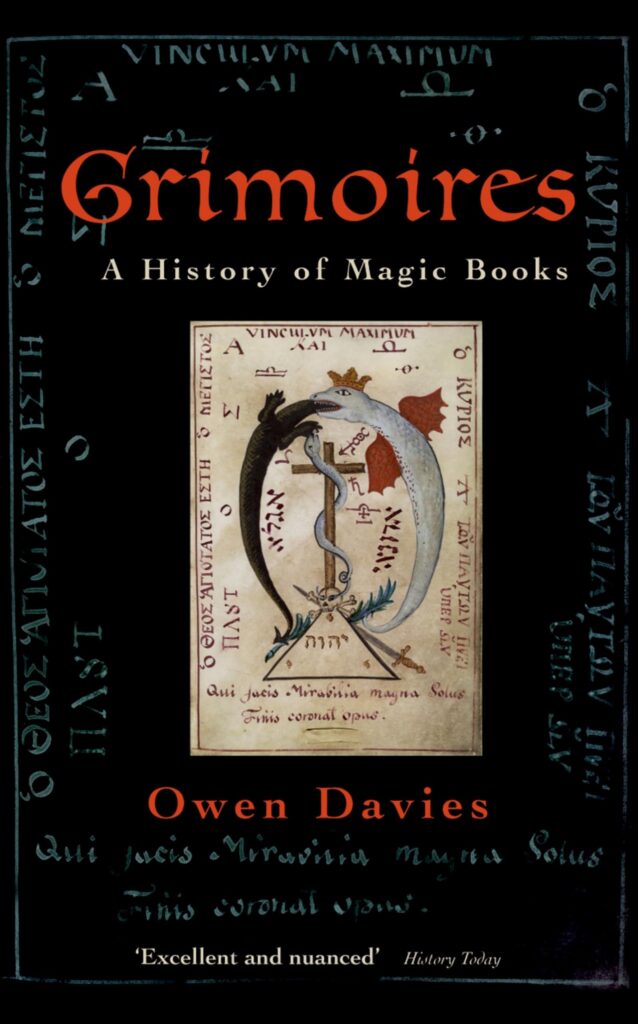
Grimoires: A History of Magic Books
Owen Davies, 2009
A companion to Popular Magic, tracing the written tradition cunning folk drew on rather than the practitioners themselves: the spell-books, charm-collections, and conjuring manuals that circulated from the medieval period through to the nineteenth century. Useful for any card built around a written or copied charm rather than a practitioner’s own method, this deck’s spell-books and word-squares lean on it directly.
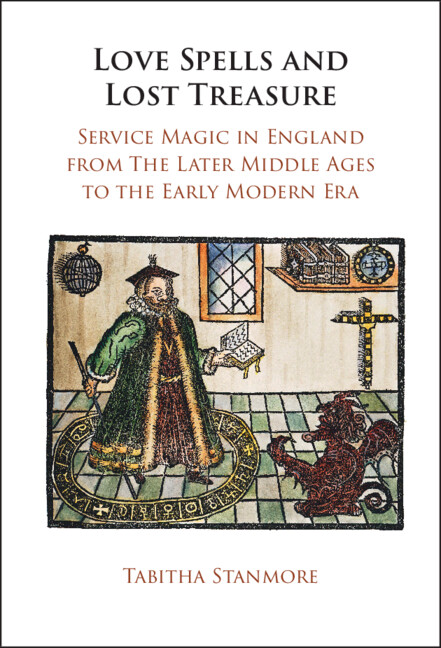
Love Spells and Lost Treasure: Service Magic in England from the Later Middle Ages to the Early Modern Era
Tabitha Stanmore, 2023
Stanmore’s foundational study of “service magic,” the paid, practical magic that ordinary people commissioned for finding lost goods, securing love, locating treasure, and winning at law. The book establishes service magicians as a distinct category, separate from both witches and learned magi: tradespeople whose magic was a transaction, not a transgression. The deck’s treatment of love magic, treasure hunting, and the practical, fee-for-service character of cunning-folk work draws directly on this research.
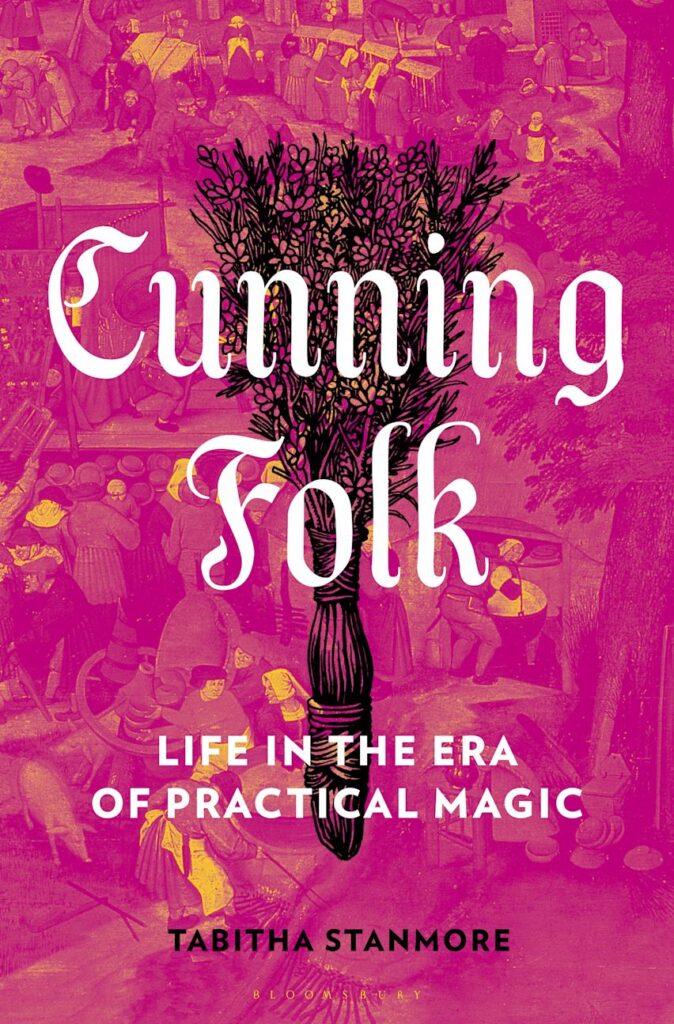
Cunning Folk: Life in the Era of Practical Magic
Tabitha Stanmore, 2024
The most recent and accessible introduction to the subject. Stanmore writes for a general audience without sacrificing historical rigour, drawing on case records and contemporary sources to bring individual cunning folk and their clients vividly to life. The ideal starting point. Also available as an audio book and a delight to listen to.
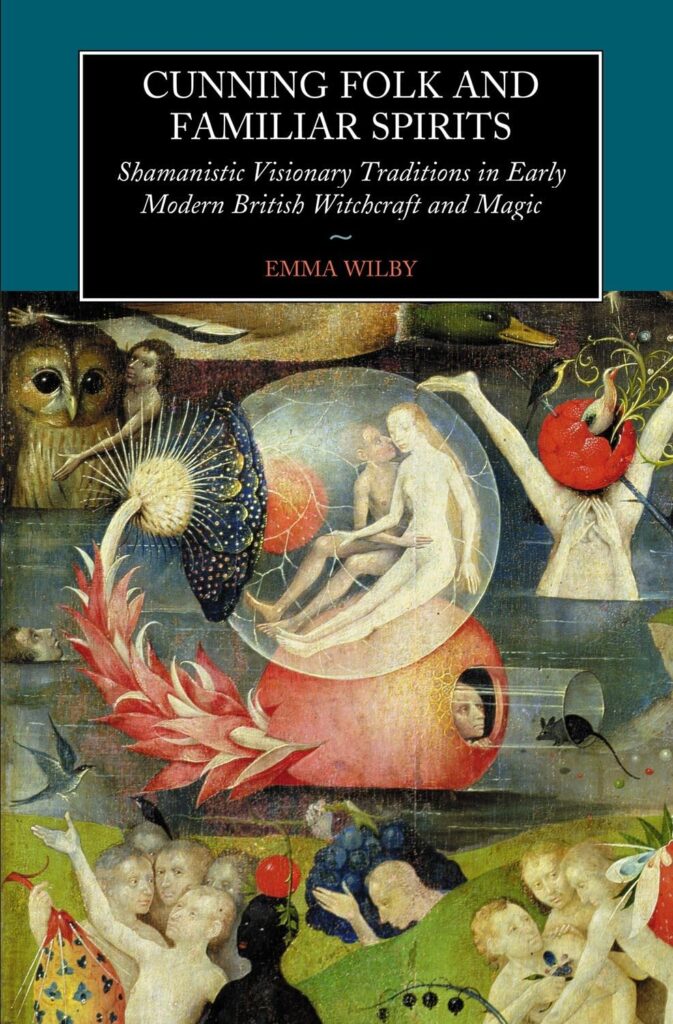
Cunning Folk and Familiar Spirits
Emma Wilby, 2005
The foundational modern study of the relationship between cunning folk, witches, and their animal familiars, drawn from trial records and folk belief. Dense but essential: Wilby takes the practitioners’ own worldview seriously rather than explaining it away, which makes this unlike most academic treatments of the subject. Sometimes makes it difficult to identify the line between cunning folk and witches, but breath-taking in scope and concept.
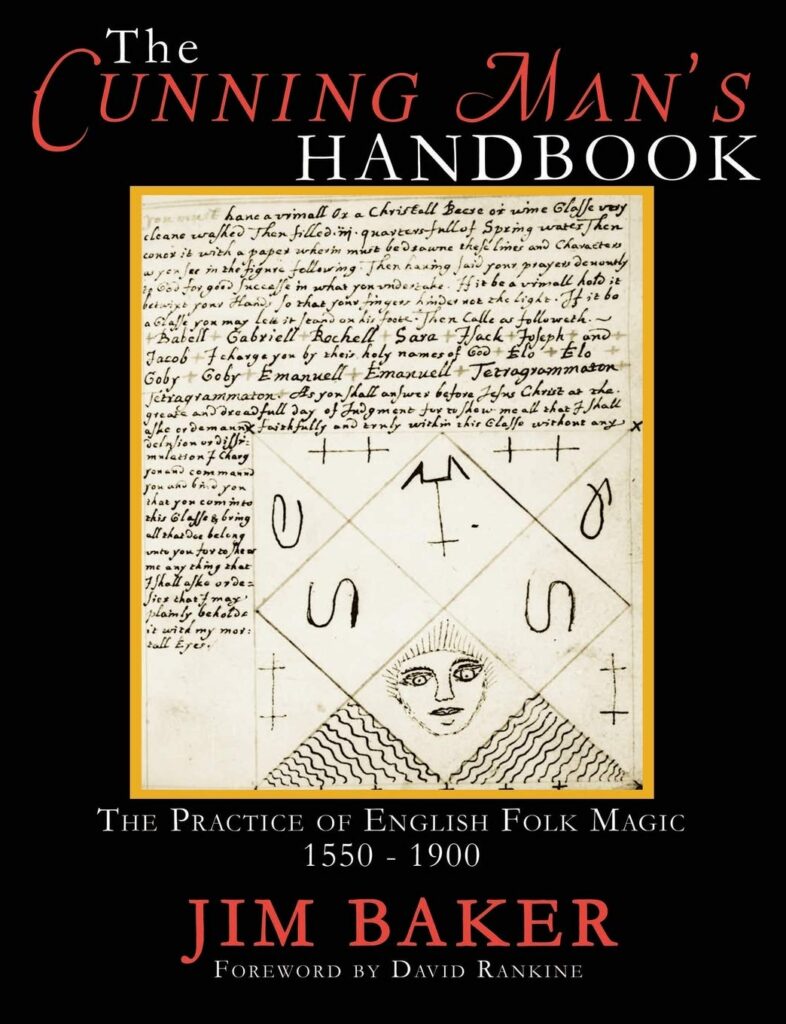
The Cunning Man’s Handbook
Jim Baker, 2014
A reconstruction of cunning folk practice drawn from surviving manuscripts and case records. More practical in orientation than Wilby or Davies: it shows what a cunning person actually did, what they said, and what they wrote down. Invaluable for understanding the mechanics of the practice.
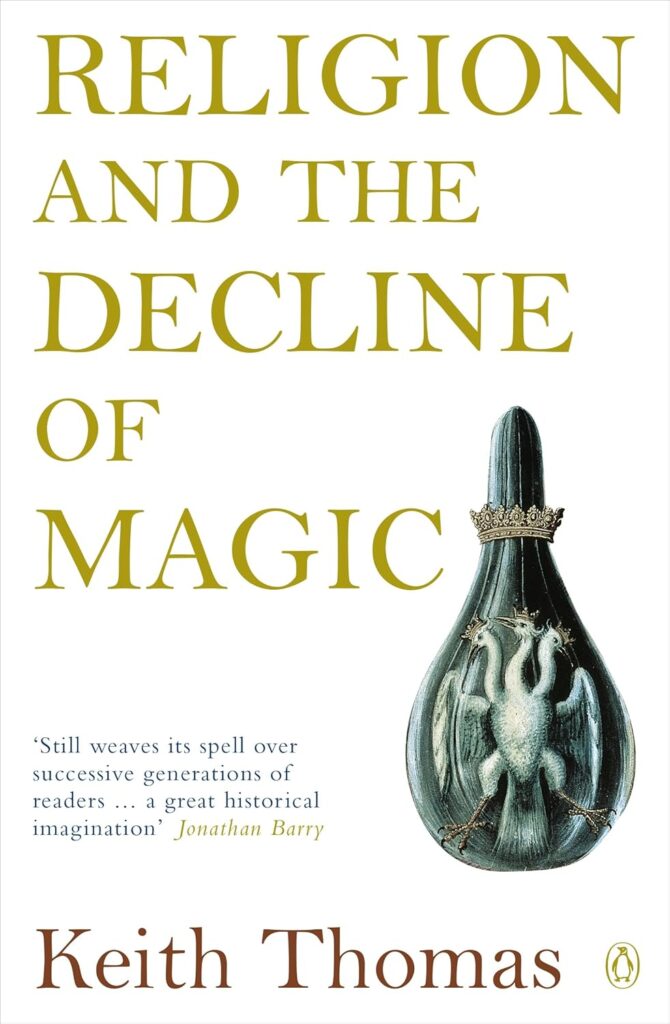
Religion and the Decline of Magic
Keith Thomas, 1971
The great landmark study of belief in early modern England. Vast in scope, covering astrology, prophecy, witchcraft, and folk magic in their social and religious context, and still essential reading more than fifty years after publication. Cunning folk are one thread in a much larger tapestry, but Thomas situates them with exceptional clarity. The book that started it all.
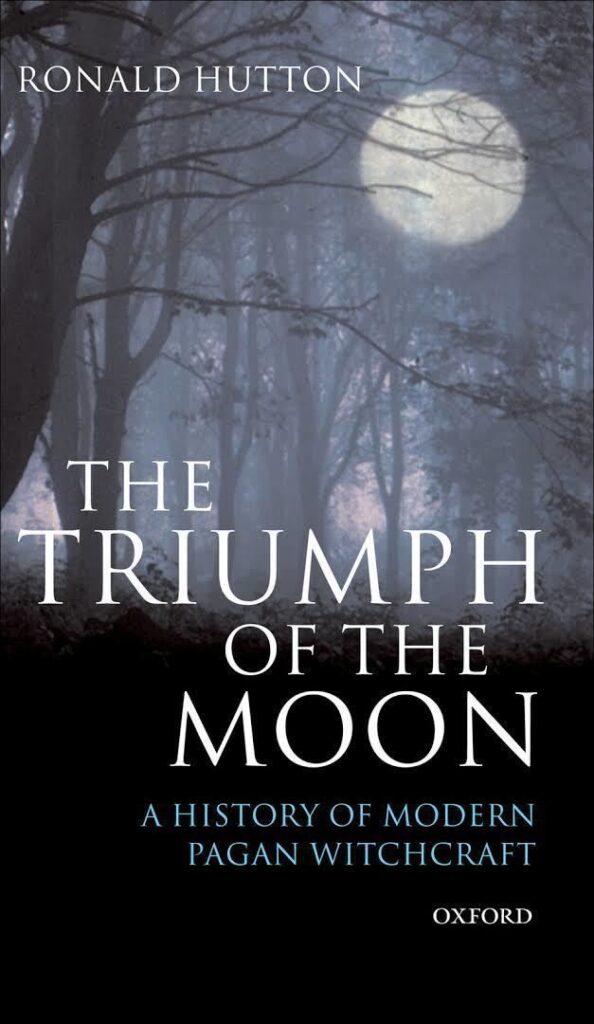
Triumph of the Moon: A History of Modern Pagan Witchcraft
Ronald Hutton, 1999 (cited from the 2019 revised edition)
Hutton’s chapter on cunning-folk (“Finding a Low Magic”) arrives at its conclusions independently of Davies and Baker, and the three converge almost exactly, useful corroboration rather than a fourth opinion. His most valuable contribution to this project is the case against any continuity between cunning craft and modern paganism: the historical record shows no shamanism, no pre-Christian survival, nothing but committed, ordinary Christians at work. Also rich in court-level texture: costume, consulting rooms, surviving notebooks, the sort of detail that doesn’t appear anywhere else.
Sources by Card
Please note, this is currently a WORK IN PROGRESS changing and updating on a daily basis. This note will be removed when the content and sources are settled.
The Aces (The Gifts):

Ace of Hearts
Owen Davies, Popular Magic (2003), p.70. Owen Davies, “Cunning-Folk in England and Wales during the Eighteenth and Nineteenth Centuries,” Rural History 8:1 (1997), p.98.

Ace of Diamonds
Owen Davies, Popular Magic (2003), p.70. Emma Wilby, Cunning Folk and Familiar Spirits (Sussex Academic Press, 2005), pp.67-70.

Ace of Clubs
Owen Davies, Popular Magic (2003), p.145 (Ch.5, “Books”).

Ace of Spades
Emma Wilby, Cunning Folk and Familiar Spirits (Sussex Academic Press, 2005), pp.60-61. Owen Davies, Popular Magic (2003), p.83-84.
The Pips (The Cunning Craft) — ranks 2 through 9:
THE TWOS

2♥ The Love Potion Tabitha Stanmore, Cunning Folk: Life in the Era of Practical Magic (2024), p.40.

2♦ The Pestle & Mortar Owen Davies, Popular Magic: Cunning-folk in English History (Hambledon Continuum, 2003), p.110–111. Joseph Blagrave, Astrological Practice of Physick (1671).

2♣ The Divining Rod Owen Davies, Popular Magic (2003), p.95–96. Keith Thomas, Religion and the Decline of Magic (1971), p.235–236.

2♠ The Barrow Owen Davies, Popular Magic (2003), p.93–94.
THE THREES

3♥ The Love Charm Owen Davies, Popular Magic (2003), p.102, p.2–3. Keith Thomas, Religion and the Decline of Magic (1971), p.233.

3♦ The Abracadabra Charm Quintus Serenus Sammonicus, Liber Medicinalis (c.3rd century AD). Daniel Defoe, A Journal of the Plague Year (1722). Owen Davies, Popular Magic (2003), p.149–150, p.154–155.

3♣ The Conjured Ring Tabitha Stanmore, Love Spells and Lost Treasure (2023), p.214–215. Letters and Papers, Foreign and Domestic, Henry VIII, 1546–1547, 21/2, pp.198–201.

3♠ The SATOR Square Owen Davies, Popular Magic (2003), p.153–154. Owen Davies, Grimoires: A History of Magic Books (2009), p.70. Reginald Scot, The Discoverie of Witchcraft (1584). Museum of Witchcraft and Magic, Boscastle (object #1583, “Charm: Talisman SATOR square”).
THE FOURS

4♥ The Nativity Chart Owen Davies, Popular Magic (2003), p.43–46.

4♦ The Measuring Cord Owen Davies, Popular Magic (2003), p.84. Emma Wilby, Cunning Folk and Familiar Spirits(2005), p.37. Tabitha Stanmore, Love Spells and Lost Treasure (2023), p.48–49.

4♣ The Almanac Owen Davies, Popular Magic (2003), p.134–138 (Ch.5, “Books”). Bernard Capp, Astrology and the Popular Press: English Almanacs 1500–1800 (1979), p.290 (with pp.21, 129).

4♠ The Spell Book Owen Davies, Popular Magic (2003), p.141–142. Owen Davies, Grimoires (2009). The Grimoire of Arthur Gauntlet, ed. David Rankine (2011).
THE FIVES

5♥ The Soured Churn Owen Davies, Popular Magic (2003), p.193–194. William Henderson, Notes on the Folk-Lore of the Northern Counties of England (1879 rev. edn), p.184.

5♦ The Thunderstone Source pending.

5♣ The Lost Spoons Tabitha Stanmore, Cunning Folk (2024), p.1–3. Tabitha Stanmore, Love Spells and Lost Treasure(2023), p.96–97. London Metropolitan Archives, WJ/SR/NS/50/22 (1637).

5♠ The Wax Figure Owen Davies, Popular Magic (2003), p.1. Tabitha Stanmore, Love Spells and Lost Treasure(2023), p.65–66, p.119–120.
THE SIXES

6♥ The Cleansed Shirt Tabitha Stanmore, Cunning Folk (2024), p.55.

6♦ The Drawn Breath Emma Wilby, Cunning Folk and Familiar Spirits (2005), p.36.

6♣ The Horseshoe Joseph Blagrave, Astrological Practice of Physick (1671), quoted in Daniel Harms, Witch Bottles(2020).

6♠ The Pierced Heart Richard Blakeborough, Wit, Character, Folklore and Customs of the North Riding of Yorkshire(1898), p.151. William Henderson, Notes on the Folk-Lore of the Northern Counties of England (1879), pp.181–188. F.T. Elworthy (1895), pp.53–55. Pitt Rivers Museum, Oxford.
THE SEVENS

7♥ The Psalm Owen Davies, Popular Magic (2003), p.62, p.149.

7♦ The Holy Well Source pending.

7♣ The Bible & Key Owen Davies, Popular Magic (2003), p.100–101. Keith Thomas, Religion and the Decline of Magic (1971), p.254. J.G. Nichols (ed.), Narratives of the Days of the Reformation (London, 1859), pp.332–35.

7♠ The Churchyard Herb Owen Davies, “Cunning-Folk in the Medical Market-Place during the Nineteenth Century,” Medical History 43 (1999), p.71.
THE EIGHTS

8♥ The Witch Cake Owen Davies, Popular Magic (2003), p.110.

8♦ “The Cast-Off Stone” – Source pending

8♣ The Mirror Owen Davies, Popular Magic (2003), p.99–100, p.106–107. Eric Maple, “Cunning Murrell: A Study of a Nineteenth-Century Cunning Man in Hadleigh, Essex,” Folklore 71 (1960).

8♠ The Hag Stone Source pending. Note: a real, confirmed English object exists (Pitt Rivers Museum, Kimber’s stone, Rushmore near Salisbury) but it supports only the protective/nailed-to-door use.
THE NINES

9♥ The Concealed Shoe Northampton Museum Concealed Shoe Index. Ralph Merrifield, The Archaeology of Ritual and Magic (1987). Brian Hoggard, “The Archaeology of Counter-Witchcraft and Popular Magic,” in Owen Davies and Willem de Blécourt (eds.), Beyond the Witch Trials (2004).

9♦ The Witch Bottle Joseph Blagrave, Astrological Practice of Physick (1671), p.154–155. Joseph Glanvil, Saducismus Triumphatus (1681), p.205. Daniel Harms, Witch Bottles (2020).

9♣ The Sieve & Shears Owen Davies, Popular Magic (2003), p.99–100. John Aubrey, Remains of Gentilisme and Judaisme (1881 edn). Tabitha Stanmore, Love Spells and Lost Treasure (2023), p.53–55.

9♠ The Toad Bone George Ewart Evans, The Horse in the Furrow (1960), p.270. George Ewart Evans, The Pattern Under the Plough (1966). Norfolk Record Office, MS 21630/47 502X2 (c.1958). Owen Davies, Popular Magic (2003), pp.84-85, general context on the related “toad doctors of western England” practice, not the primary anchor for this card’s specific ritual.
The Tens (The Wishes):


Happiness. Health. Wealth. Peace. The Wishes carry no citations. Unlike every other card in this deck, they name no practitioner and no documented case, because an outcome, by its nature, leaves no record behind. Nobody testifies in court to how peaceful their house felt once the trouble had passed. That silence is not a gap in the research. It is what the rank is for: A wish fulfilled.
The Courts (The Cunning Folk):
The Court of Hearts
Jack of Hearts: Anne Jefferies

Moses Pitt, An Account of one Ann Jefferies, now living in the County of Cornwall (1696), full text at quod.lib.umich.edu. Pitt’s letter to William Turner, reprinted in William Turner, A Compleat History of the Most Remarkable Providences (1697). Joseph Morgan, reprint of Pitt’s account, in Phœnix Britannicus (1732). C.S. Gilbert, An Historical Survey of the County of Cornwall, Vol. I (1817). Robert Hunt, Popular Romances of the West of England (1865), including the 1903 edition’s appendix reprint of Pitt’s letter. G.C. Boase and W.P. Courtney, Bibliotheca Cornubiensis (1874). Henry Richard Tedder, “Pitt, Moses,” Dictionary of National Biography (1885–1900). Sabine Baring-Gould, Cornish Characters and Strange Events (1909). Barbara C. Spooner, John Tregagle of Trevorder: Man and Ghost (1935). Emma Wilby, Cunning Folk and Familiar Spirits (2005). Peter Marshall, “Ann Jefferies and the Fairies: Folk Belief and the War on Scepticism in Later Stuart England,” in Angela McShane and Garthine Walker (eds.), The Extraordinary and the Everyday in Early Modern England (Palgrave Macmillan, 2010). Calendar of Clarendon State Papers, Vol. 1, ed. Ogle and Bliss (1872), letters dated 1647. Katherine Briggs, An Encyclopaedia of Fairies, entry “Jefferies, Anne” (1976). Anders Ingram, “History of St Teath woman who claimed to have had encounters with fairies comes to light,” thepost.uk.com (2019).
Queen of Hearts: Margery Jourdemayne

G.L. Harriss, “Cobham, Eleanor,” Oxford Dictionary of National Biography (2004). Jessica Freeman, “Sorcery at Court and Manor: Margery Jourdemayne, the Witch of Eye Next Westminster,” Journal of Medieval History 30 (2004). Gemma Hollman, Royal Witches: Witchcraft and the Nobility in Fifteenth-Century England (2019). R.A. Griffiths, “The Trial of Eleanor Cobham: An Episode in the Fall of Duke Humphrey of Gloucester,” Bulletin of the John Rylands Library 51 (1969). Francis Young, Magic as a Political Crime in Medieval and Early Modern England (2018). Edward Hall, Chronicle (1548). Richard Grafton, Chronicle (1569), and Robert Fabyan, The New Chronicles of England and France (c.1516). William Gregory, Chronicle of London, in James Gairdner (ed.), The Historical Collections of a Citizen of London in the Fifteenth Century (Camden Society, 1876).
King of Hearts: Richard Morris

The Life and Mysterious Transactions of Richard Morris, Esq., Better Known by the Name of Dick Spot, the Conjuror (London, 1798). Elias Owen, Welsh Folk-Lore: A Collection of the Folk-Tales and Legends of North Wales (1896). Owen Davies, “Cunning-Folk in England and Wales during the Eighteenth and Nineteenth Centuries,” Rural History 8:1 (1997). Owen Davies, Popular Magic: Cunning-Folk in English History (2003). Ronald Hutton, The Triumph of the Moon: A History of Modern Pagan Witchcraft (1999).
The Court of Diamonds
Jack of Diamonds: Ursula Kemp

W.W., A True and Just Recorde of the Information, Examination and Confession of all the Witches, taken at St Oses in the Countie of Essex (1582), full text via the Text Creation Partnership. Emma Wilby, Cunning Folk and Familiar Spirits (2005), p.116. Owen Davies, Popular Magic: Cunning-folk in English History (2003), p.63. St Osyth Museum, “1921: The Witches’ Skeletons,” stosythmuseum.co.uk. Marion Gibson, The Witches of St Osyth: Persecution, Betrayal and Murder in Elizabethan England (Cambridge University Press, 2022). Jonathan Durrant, “A Witch-Hunting Magistrate? Brian Darcy and the St Osyth Witchcraft Cases of 1582,” English Historical Review 136:578 (2021).
Queen of Diamonds: Bridget Bostock

Jane Shaw, “Bostock, Bridget,” Oxford Dictionary of National Biography (2004). Gentleman’s Magazine, vol.18 (1748) and vol.19 (1749). Whitehall Evening Post, August 1748. Ronald Hutton, The Triumph of the Moon (1999), ch.6. Monthly Magazine, vol.25 (June 1808) and vol.26 (August 1808). H.D. Rack, “Doctors, demons and early Methodist healing” (1982/1993). W.H. Chaloner, Bridget Bostock: The White Witch of Coppenhall (1948).
King of Diamonds: John Wrightson

Henry Wilson, Wonderful Characters (1842), “The Wise Man.” Richard Blakeborough, Wit, Character, Folklore and Customs of the North Riding of Yorkshire (1898). William Henderson, Notes on the Folk-lore of the Northern Counties of England (1866). Canon J.C. Atkinson, Forty Years in a Moorland Parish (1891). Owen Davies, “Cunning-Folk in England and Wales during the Eighteenth and Nineteenth Centuries,” Rural History 8:1 (1997). Owen Davies, Popular Magic: Cunning-folk in English History (2003), pp.53-54, 85, 114. Ronald Hutton, Triumph of the Moon (2019 rev. edn.), Ch.6. Pitt Rivers Museum, Oxford, accession 1893.18.8, written directions for a spell to cure sick cattle, in Wrightson’s hand, presented by Rev. J.C. Atkinson, 1893.
The Court of Clubs
Jack of Clubs: Billy Brewer

Owen Davies, “Billy Brewer: the Wizard of the West,” from A People Bewitched: Witchcraft and Magic in Nineteenth-Century Somerset (1999), full text at uhra.herts.ac.uk/id/eprint/12332/1/Billy_Brewer.pdf. Owen Davies, “Cunning-Folk in England and Wales during the Eighteenth and Nineteenth Centuries,” Rural History 8:1 (1997). Owen Davies, Popular Magic: Cunning-folk in English History (2003). Ronald Hutton, Triumph of the Moon (2019 rev. edn.), Ch.6.
Queen of Clubs: Anne Bodenham

Edmond Bower, Doctor Lamb Revived, or, Witchcraft Condemn’d in Anne Bodenham (1653). Anon. (“James Bower, Cleric”), Doctor Lambs Darling: Or, Strange and Terrible News from Salisbury (1653). Henry More, An Antidote Against Atheism, Book III, ch.7 (2nd edn, 1655), pp.203–204. ‘The Salisbury Assizes, or, the Reward of Witchcraft’ (ballad, 1653), in Hyder E. Rollins, ed., Cavalier and Puritan (1923), pp.329–335. John Aubrey, Remaines of Gentilisme and Judaisme, ed. James Britten (1881), pp.260–261. Owen Davies, Popular Magic: Cunning-folk in English History (2003), pp.63, 145. Malcolm Gaskill, ‘Witchcraft, Politics, and Memory in Seventeenth-Century England’, The Historical Journal, 50:2 (2007), pp.289–308.
King of Clubs: Simon Forman

Sidney Lee, ‘Forman, Simon’, Dictionary of National Biography, vol. 19 (1889). Lauren Kassell et al., The Casebooks of Simon Forman and Richard Napier, 1596–1634, casebooks.lib.cam.ac.uk. William Lilly, History of His Life and Times, from the Year 1602 to 1681 (1715). J. O. Halliwell-Phillipps, ed., The Autobiography and Personal Diary of Dr. Simon Forman (1849). Folger Shakespeare Library, ‘Forman’s account of seeing plays at the Globe: Macbeth, Cymbeline, Winter’s Tale’, Shakespeare Documented (2020), shakespearedocumented.folger.edu. Mathew Lyons, ‘Simon Forman fantasises about Elizabeth I’ (2012), mathewlyons.co.uk. A. L. Rowse, Simon Forman: Sex and Society in Shakespeare’s Age (1974), pp. 210–211. Owen Davies, Popular Magic (2003), p. 95.
The court of Spades
Jack of Spades: Timothy Crowther

The Journal of the Rev. John Wesley, ed. Nehemiah Curnock, entry for 24 July 1761. Owen Davies, Popular Magic: Cunning-folk in English History (2003). Owen Davies, “Cunning-Folk in England and Wales,” Rural History 8:1 (1997). Owen Davies, Grimoires: A History of Magic Books (2009). Daniel Harms, Witch Bottles: History, Culture, Magic (2020). Ronald Hutton, Triumph of the Moon (2019 rev. edn.), Ch.6.
Queen of Spades: Mary Bateman

The Extraordinary Life and Character of Mary Bateman (1809, 12th edn. 1811). William Knipe, Criminal Chronology of York Castle (1867), pp.145–149. Owen Davies, “Bateman [née Harker], Mary (1768–1809), thief and poisoner,” Oxford Dictionary of National Biography (2004). Owen Davies, Popular Magic: Cunning-folk in English History (2003), pp.49–51, 72. Sabine Baring-Gould, “Mary Bateman, Witch and Murderess,” Yorkshire Oddities, Incidents and Strange Events (1874, cited edn. 1900). York Museums Trust, “Prisoner Stories: Mary Bateman” (blog). Summer Strevens, “The Yorkshire Witch, Mary Bateman: using family history sources to research the trial and execution of Mary Bateman,” family-tree.co.uk (2016).
King of Spades: James Murrell

Owen Davies, Popular Magic: Cunning-folk in English History (2003). Eric Maple, “Cunning Murrell: A Study of a Nineteenth-Century Cunning Man in Hadleigh, Essex,” Folklore 71 (1960). Arthur Morrison, “A Wizard of Yesterday,” The Strand Magazine (1900). Ronald Hutton, Triumph of the Moon (2019 rev. edn.), Ch.6. Eric Maple, The Dark World of Witches (New York: A.S. Barnes & Co., 1962), cited via Rosemary Ellen Guiley, The Encyclopedia of Witches, Witchcraft and Wicca (1999/2008), p.239.
The Jokers (The Powers):
Joker: The Man in Black

Thomas Potts, The Wonderfull Discoverie of Witches in the Countie of Lancaster (1613). W.W., A True and Just Recorde of the Information, Examination and Confession of all the Witches taken at S. Oses (1582). King James I, Daemonologie (1597). Emma Wilby, Cunning Folk and Familiar Spirits (2005). Owen Davies, Popular Magic: Cunning-Folk in English History (Hambledon Continuum, 2003). Owen Davies, Grimoires: A History of Magic Books (Oxford University Press, 2009). Keith Thomas, Religion and the Decline of Magic (1971). Ronald Hutton, The Triumph of the Moon (Oxford University Press, 1999).
JOKER: The Angel

Joan Willimot’s examination, in The Wonderful Discoverie of the Witchcrafts of Margaret and Phillip Flower (1619), full text at quod.lib.umich.edu. Eric Maple, “Cunning Murrell: A Study of a Nineteenth-Century Cunning Man in Hadleigh, Essex,” Folklore 71 (1960). Jane Shaw, “Bostock, Bridget,” Oxford Dictionary of National Biography (2004). Owen Davies, Popular Magic: Cunning-Folk in English History (Hambledon Continuum, 2003). Emma Wilby, Cunning Folk and Familiar Spirits (Sussex Academic Press, 2005). Keith Thomas, Religion and the Decline of Magic (1971).