3♣ The Luck Charm · Tipping the Odds
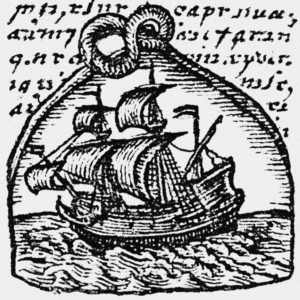
Luck, in a fishing town, was not something you simply hoped for. It was something you went and bought, before every voyage, the same way you’d buy rope or salt fish. A cunning-man’s charm did the asking on your behalf, in words plain enough for anyone to understand: “I charge you and all of you, in the high sword name, to assist and blesse Cuthbert Burrell belonging to [his ship] from all rocks and sands, storms and tempests thereunto belonging, for this yeare.” Cuthbert Burrell paid to have his own luck spoken for, by name, for the year ahead.
It wasn’t only sailors, and it wasn’t always tied to an object at all. One Tudor magician, already paid handsomely to build a nobleman a gambling ring, charged nearly £8 up front for something separate first: “various spells for luck” at the gaming table, no ring, no charm to carry, just the luck itself, sold outright. Twenty shillings, or eight pounds, or whatever the trade could bear, luck had a going rate.
It wasn’t only the professionals, either. Among Lancashire farmers, buying cattle without the seller handing back a small coin “for luck” was asking for trouble. One farmer, well into his eighties, remembered doing it just the once as a young man, forgetting to ask for the coin back. The cow was found dead in the field not long after. He never went without it again, not for fifty years.
Nobody waited for their luck to turn. They went and asked for it, or paid for it, or simply refused to close the deal without it.
Sources
Owen Davies, Popular Magic: Cunning-Folk in English History (Hambledon Continuum, 2003), pp.91, 102-104. Tabitha Stanmore, Love Spells and Lost Treasure: Service Magic in England from the Later Middle Ages to the Early Modern Era(Cambridge University Press, 2023), p.94. William Henderson, Notes on the Folk-Lore of the Northern Counties of England and the Borders (1879), p.120.