6♥ The Cleansed Shirt · Mending
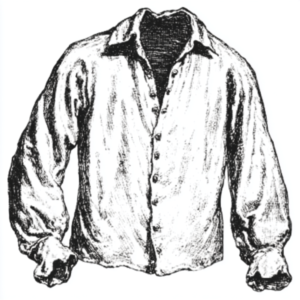
Joan Squyer lived near Canterbury, and in 1474 she admitted to something she had already been telling her neighbours to try for themselves: she had taken holy water from her own parish church and washed her husband’s shirts in it. Nothing else changed. She gave him no potion, spoke no charm over him, confronted him with nothing. He simply grew, in her own words, “humble and obedient to her will,” and stayed that way.
Church officials heard about the theft and were not amused by it. Squyer was made to perform public penance for taking what belonged to the church, whatever good it had done her marriage. Whether her neighbours took the method up anyway, once she had shown them it worked, is not recorded.
Hers was not an isolated case. A Canterbury diocesan court book of the same period logs another instance from the same decade, a woman using holy water for the identical purpose, husband’s obedience secured with nothing more than washing. Elsewhere in the same run of church-court cases, other women were buying charms to carry against their skin or renewing yearly contracts with a cunning man to keep a husband’s temper sweet, paid for in coin and shirts of their own. Against those, Squyer’s method cost her only what she could take unnoticed on a Sunday.
No confrontation, no bought spell, no credit claimed. The man wearing the shirt never worked out why he had softened. He only knew that he had.
Sources
Tabitha Stanmore, Cunning Folk: Life in the Era of Practical Magic (2024), p.55. Tabitha Stanmore, Love Spells and Lost Treasure (2023), p.62. Canterbury diocesan court book, DCb Y.1.10, fol. 209v, via Karen Jones and Michael Zell, “‘The Divels Speciall Instruments’: Women and Witchcraft before the ‘Great Witch-Hunt’,” Social History 30.1 (2005), p.54.