4♠ The Spell Book · Guidance
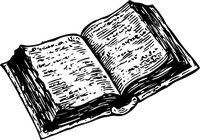
Not every cunning person’s book was learned Latin ceremonial magic. Many kept something plainer: a single manuscript, added to over years, meant for their own eyes and one chosen apprentice’s, never printed at all.
Arthur Gauntlet, a cunning-man working out of Gray’s Inn Lane in London through the 1620s and 1630s, kept exactly this kind of book. His circles were cut wider than the standard nine feet found in other grimoires of the time, fourteen feet across, and where most conjurors favoured a sword, Gauntlet worked almost entirely with a wand. Small, deliberate departures from the books he’d copied out of, the mark of someone who had actually used the thing, not just owned it.
He worked with a skryer named Sarah Skelhorn, who saw angels crowding every room of a house until she grew tired of them, and called them to her crystal with her own private words: “Oh ye good angels, only and only, &c.” The astrologer William Lilly, who knew them both, thought little of Gauntlet himself, “a very lewd fellow,” but had nothing but admiration for Sarah, “the best eyes for that purpose I ever yet did see.” When Gauntlet died, Lilly bought his books outright and sold them on to his own pupil. Rare notions, he said, worth having.
Not every book came from years of use, either. In 1856, a Staffordshire cunning-man named James Tunnicliff told a client plagued by witchcraft that the only cure now required a proper spell-book, and that he would have to send to London to get one.
Whoever held the book held the method already solved. The only decision left was whether to follow it, or write one of their own.
Sources
David Rankine, ed., The Grimoire of Arthur Gauntlet (Avalonia, 2011), citing William Lilly’s own autobiography (1668, 1774 edn) throughout. Owen Davies, Popular Magic: Cunning-Folk in English History (Hambledon Continuum, 2003), p.141.