3♥ The Love Charm · Rekindling
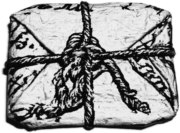
A love charm was not always for winning someone new. Just as often it was for a marriage already made, gone cold, and wanted back. Cunning folk sold a written charm for exactly this: words set down on paper, folded small, sealed, and carried against the body until the feeling it named came back.
In Oldham, a woman named Sarah Ann Tomlinson learned from a cunning man called Clayton Chaffer that her husband had been unfaithful for six years. Rather than let her leave him, he sold her a charm for seven shillings, sealed with different coloured wafers, to be worn next to her heart under her stays. She was to put herbs in his tea besides, and burn his urine in the fire while saying the Lord’s Prayer. He promised to make him one of the best of husbands, as he had done, he said, for scores before her.
Some charms were not bought once but rented. A Newcastle cunning man named Peter Banks drew up magic leases binding a husband to good behaviour, the way a landlord binds a tenant. A woman named Jane Crossby paid ten shillings and two new shirts for one, and for a year her husband was loving and kind. When the year ran out and she let the lease lapse, he turned ill and untoward again, exactly as before. The charm was never a cure taken once. It was a precaution, renewed on schedule, or it stopped holding.
England’s own law took the whole business seriously enough to name it outright. The 1542 statute against conjuration and witchcraft named only three crimes worth the gallows: hunting for buried treasure, detecting a thief by magic, and provoking any person to unlawful love. Decades before that law existed, a widow in London had already gone looking for a cunning man to win her a rich husband, and another woman had already been hauled before the courts for the books she kept to brew love potions from. Getting a heart back, it turned out, needed just as careful tending in the eyes of the law as it did on the page.
The lease always ran out eventually. The trick was renewing it before anyone noticed it had.
Sources
Owen Davies, Popular Magic (2003), pp.193-194. William Henderson, Notes on the Folk-Lore of the Northern Counties of England (1879), pp.183-185. Richard Blakeborough, Wit, Character, Folklore and Customs of the North Riding of Yorkshire (1898), pp.176-177. Owen Davies, Popular Magic: Cunning-Folk in English History (2003), pp.2-3, 102.