4♣ The Almanac · The Right Day
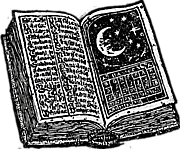
Cunning folk did not compete with the almanac. They kept one, alongside the ephemeris and the herbal, a printed reference to work from rather than calculate fresh for every client.
A Lincolnshire cunning-man examined by a magistrate in 1695 could barely read or write, “understood no Latin, nor no art or science, nor could scarce spell words right,” yet he kept several almanacs and a book on mathematics prominently on display. Whether or not he could really use them, their mere presence was enough to convince his clients he held knowledge they didn’t.
Others went further and published their own. The astrologer Sarah Jinner ran her own practice and folded it straight into print, including in one of her almanacs a remedy for impotence she attributed to a witch’s curse, the same advice she might otherwise have sold across a table. Better-known practitioners like William Lilly drew up astrological figures for individual clients investigating suspected witchcraft, the identical skill that filled a printed almanac’s pages turned to one person’s particular trouble.
The stars did not change depending on who was asking. Printed for everyone or drawn up for one, the method held.
Sources
Bernard Capp, Astrology and the Popular Press: English Almanacs 1500–1800 (1979), p.129. Owen Davies, Popular Magic: Cunning-Folk in English History (2003), p.70.