5♣ The Lost Spoons · Entrapment
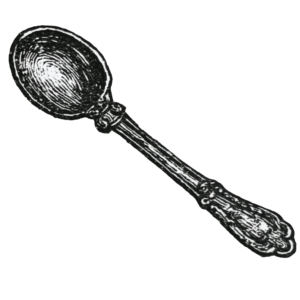
Mabel Gray of Westminster lost the only spoons she owned in 1637, and her friends, wanting to help, sent her somewhere no respectable woman went alone: the worst parts of London. That was where the people who could find things were said to live.
She went first to a cunning woman in Southwark, who heard her out and passed her straight on to a cunning man on Lutners Lane. Mabel paid him a shilling in coin and a shilling in drink for his trouble. He did not send her home with a cure, he passed her on to someone else who could help. He walked her south past Fleet Street and deeper into the city’s worst quarter, to Ram Alley, a stretch so overrun with thieves and debtors seeking sanctuary that it was known simply as a place of evil reputation, and there handed her on to a third man, one Mr Tunn. That is where the record leaves her: two fees paid, two strangers deep into a district built for hiding, and still no spoons.
She was not the only one led on by a recommendation that went nowhere. A widow named Margaret Geffrey once handed over the only property she owned to a neighbour who promised to find her a cunning man on her behalf. He found none, and it took a lawsuit to get her own goods back. Losing a spoon and going to a cunning woman about it was so recognisable a situation that Elizabethan audiences watched it play out as comedy: in John Lyly’s Mother Bombie, a servant girl asks the title character who stole her silver spoon from the buttery, and is told it was never stolen at all, only mislaid, somewhere she would rather not admit to. On stage, at least, the cunning woman always has an answer.
Every step of Mabel’s path cost her something. As far as we know, none of them ever brought her spoons any closer.
Sources
Tabitha Stanmore, Cunning Folk (2024), pp.1-3. Tabitha Stanmore, Love Spells and Lost Treasure (2023), pp.96-99, 172. John Lyly, Mother Bombie (1594 edn), Act 3, Sc.4. London Metropolitan Archives, WJ/SR/NS/50/22 (1637).