8♦ The Cast-Off Stone · Casting Off
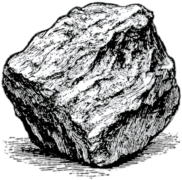
Nothing about the stone mattered. It was an ordinary pebble off an ordinary road, and there was no charm spoken over it and nothing written on it. What mattered was the counting. One pebble for each thing wrong with you, and the trouble went where the count sent it.
In Northumberland, a man with warts counted them, put that many pebbles into a small bag, and carried the bag to where four roads met. He dropped it there and left. The warts went with it.
Then the part that gives the charm its edge. The affliction had not been destroyed. It was lying in a bag on the ground, in working order, waiting. Whoever picked up the bag would get the warts.
The same charm turns up in the West of England, and in the North Riding of Yorkshire they made it stranger still: take a pebble from as many different graves as you have warts, tell nobody you are doing it, and throw the bag back over your left shoulder without looking to see where it lands.
It belonged to a whole family of English cures built the same way. Rub the wart with a black snail and hang the snail on a thorn, and the wart goes as the snail dies. Rub it with stolen meat and throw the meat away. Cut an apple, rub it, tie it shut and bury it. Cross the wart nine times with a new pin and fling the pin over your shoulder. Put the trouble into a thing, then get rid of the thing.
Francis Bacon set the whole principle down as a common experiment: taking away warts by rubbing them with something “that afterwards is put to waste and consume.” He believed it, he wrote, “the rather because of mine own experience.” A hundred warts, gone in five weeks, including one he had carried since he was a boy. Their going, he admitted, “doth yet stick with me.”
So somewhere, where four roads met, a small bag sat on the ground. And the worst thing anyone passing could do was wonder what was inside it.
Sources
William Henderson, Notes on the Folk-Lore of the Northern Counties of England and the Borders (1879), p.139. Richard Blakeborough, Wit, Character, Folklore and Customs of the North Riding of Yorkshire (1898), p.146.