The Cunning Folk
Stories Worth Being Retold
Billy Brewer
Taunton, Somerset, 1818–1890
♣ Jack of Clubs | Keyword: Charm
Billy Brewer sold sugar from a grocer’s shop on Alfred Street in Taunton for fifty years, and the whole town knew exactly what else was on offer. He read planets. He found lost property no one else could trace. He cured cattle that everyone else had given up on. And when he went touring the villages of the Somerset Levels, sometimes for weeks at a stretch, every household gave him the best bed in the house, because it was thought the greatest luck alive simply to share a room with him. Farmhands are recorded actually quarrelling over whose turn it was.
He was born at Lyng, five miles off, in 1818, the son of a shoemaker, and started out walking the roads selling clay pipes door to door, which is how the whole region came to know his face as Billy the Piper, years before he ever told a fortune. By the time he had been fifty years in Taunton, the chestnut tree he’d planted outside his new shop the day he arrived was still flourishing. A letter addressed simply “Brewer, Taunton” found him without trouble. The Post Office needed no more than that.
His most famous job says everything about how he worked. A farmer’s cattle were dying, one after another, no cause anyone could find. Billy arrived, pronounced it witchcraft, and named the cure: one week. He then spent ten unhurried days being fed and watered like visiting royalty before finally declaring the herd safe. He went home to Taunton five pounds richer and not remotely embarrassed about the extra three days.
That was the trick: charm, never force, and he never overplayed it. Eleven shillings was his standard fee, with a shilling handed straight back to anyone who paid him promptly. Even the newspapers that despised his trade admitted, once he was safely dead, that he showed none of the grasping greed so common to men in his line of work. Billy once treated a sick woman named Sarah Smith by tapping her palm several times, telling her each tap was a stab to the witch’s own heart, dosing her on steeped bay leaves and peppermint, then having her nail a donkey’s shoe to her own front door. When the cure failed, her husband had him hauled before the magistrates for it. The case fell apart: he had handed over the money admittedly without any faith in Brewer’s powers, so technically nobody had been deceived. This is not folklore. It is a Somerset magistrate’s own case record, January 1881. He walked out of it the same way he walked out of every other summons in fifty years of practice: entirely free.
He was hard to miss doing any of it. A long Inverness cloak, a sombrero hat, rings crowding every finger, and in later years a dishevelled brown wig sitting oddly against his own grey whiskers. He turned up to every village club feast for miles around in his finest, lavender gloves included. He never married. He kept cats.
His post came from everywhere, and he answered all of it. Women wrote about soldiers who had stopped writing back. A tongue-tied farmer wrote wondering whether he dared send a note of his own to a girl who wouldn’t talk to him. One woman waged a running war on a rival she called only Jezebel, three separate letters demanding he “keep her down, for God’s sake.” A man’s best clothes had turned an inexplicable yellow, again, and he wanted it undone. A widow near Bristol wanted only to know whether her son, gone to America, was still alive. Nothing was too small for him, and short of raising the dead, not much was too large.
Not that he was always so mild. A lodger nicknamed Wax Candles by the neighbours once got a broom broken across his head hard enough to need hospital treatment, over some quarrel nobody wrote down the cause of. Billy was hauled in for assault. The case collapsed when the man simply never turned up to testify against him.
He died on the 28th of December 1890, and the town could not organise so much as his funeral without something going wrong. The hearse waited outside his door the better part of an hour because the police and the parish’s own relieving officer simply didn’t turn up. The crowd that gathered got loud enough that the local paper primly reported them talking “not in the choicest of language.” The driver set off for entirely the wrong cemetery. The vicar very nearly refused to bury him at all, over a missing certificate nobody had thought to bring. Owen Davies, who has done more than anyone to bring this man back into the light, put the whole shambles in one line: Billy Brewer was “buried with less ceremony and less care than would have been bestowed on a favourite dog.”
Every other crisis in Taunton, for fifty years, he could charm his way through. His own funeral was the one job Billy Brewer never got to finish.
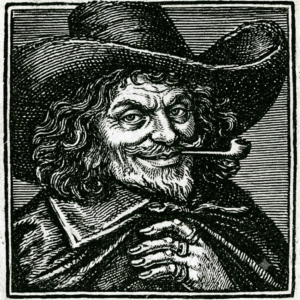
The image is a whimsical imagining based on the historical record, not an authentic portrait.
Sources:
Owen Davies, “Billy Brewer: the Wizard of the West,” from A People Bewitched: Witchcraft and Magic in Nineteenth-Century Somerset (1999), full text at uhra.herts.ac.uk/id/eprint/12332/1/Billy_Brewer.pdf. Owen Davies, “Cunning-Folk in England and Wales during the Eighteenth and Nineteenth Centuries,” Rural History 8:1 (1997). Owen Davies, Popular Magic: Cunning-folk in English History (2003). Ronald Hutton, Triumph of the Moon (2019 rev. edn.), Ch.6.
Foundational sources are available on The Sources page.