Tamsin Blight
Helston, Cornwall, c.1793–1856
♦ Queen of Diamonds | Keyword: Audacity
Thomasine Williams was born at Gwennap, near Redruth, in 1793, into a poor Cornish family, her baptismal record correcting an earlier death-certificate date of c.1798. She was known locally as Tammy Blee. A pellar, in Cornish tradition, is one who repels evil: a cunning person whose particular gift is the removal of curses, the unbewitching of people and livestock, and the protection of those about to face danger. It’s the word everyone uses for her now. It hadn’t been printed yet when she started out. Tamsin began practising around 1830, and within five years was already spoken of as the greatest of her kind in the west of Cornwall.
Fishermen came to her for charms before putting to sea. Farmers brought bewitched cattle and horses. Young women came to find out who they were going to marry. People came from all across Cornwall, and from beyond it: according to William Bottrell, who recorded her stories in 1870, the inhabitants of the Scilly Isles crossed the water in crowds to consult her and obtain her protection, charms, spells, and counter-spells.
The story most often told about her concerns a night visit to Stythians churchyard. A widow named Jenny Hendy had died alone, rich by local reckoning, and left not a penny anywhere in her cottage. Her presumed heir, a young man called Robin, paid Tammy a sovereign to raise the old woman’s ghost and learn where the money had gone. She met him on the road at eleven the following Thursday, and at the churchyard stile she stopped to catch her breath. She’d been ordering obstinate spirits about all evening, she told him, and the one in this churchyard was the worst of the lot. A pull from the brandy bottle, a warning not to be frightened even if he saw Old Nick himself, and on they went. It was as far as Robin got. At the gate his nerve broke entirely, and he paid her a second sovereign just to walk away.
A cousin of his, a sailor freshly home from sea and certain the whole business was a trick, went in his place a few nights later. This time Tammy drew a charmed circle three times round him with her staff and told him not to step outside it, whatever he heard. What he heard was crashing, rending wood and stone, moans, groans, shrieks from the direction of the grave, and then the dead woman herself, rising. He didn’t wait to be frightened. He grabbed the thing by the arm, knocked it flat, and found underneath the shroud Tammy’s own husband, working a tin pan and a stick against the gravestones. He beat the truth out of him and walked off with all three sovereigns paid so far.
Caught red-handed, Tammy didn’t miss a step. Let it be known, she said, that the ghost really had spoken, and would haunt and mark anyone who owed the dead woman money unless they settled up within the month. It worked. Coins and folded notes started arriving through Robin’s dairy window by night, left by neighbours too frightened to risk a visit from “the sperat.” The money actually owed to him turned up months later with no help from anyone’s magic: a winter gale stripped the thatch from his roof, and there in a hole in the timbers was the old woman’s own pocket, notes and will still inside.
Her husband, James Thomas, a copper miner who made the same claims she did, never earned the same reputation. One newspaper called him “a drunken, disgraceful, beastly fellow, and ought to be sent to the treadmill.” When a warrant was issued for his arrest, he fled Cornwall and stayed gone two years. Tamsin carried on without him.
She was still working when she could no longer rise from her bed. People had themselves carried to her on stretchers in her last weeks, and, so it was said, rose up and walked back down the stairs cured. She died on 6 October 1856.
Getting caught never once cost her a client.
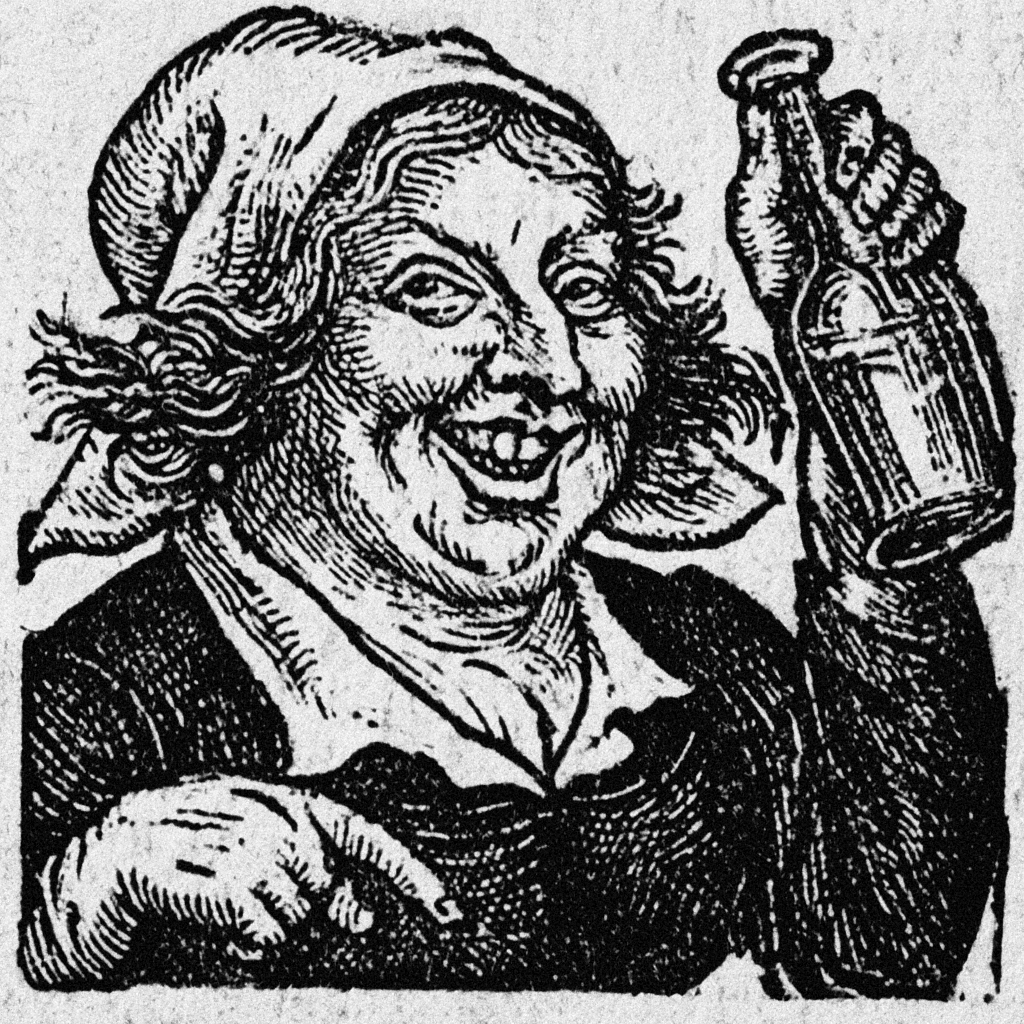
The image is a whimsical imagining based on the historical record, not an authentic portrait.